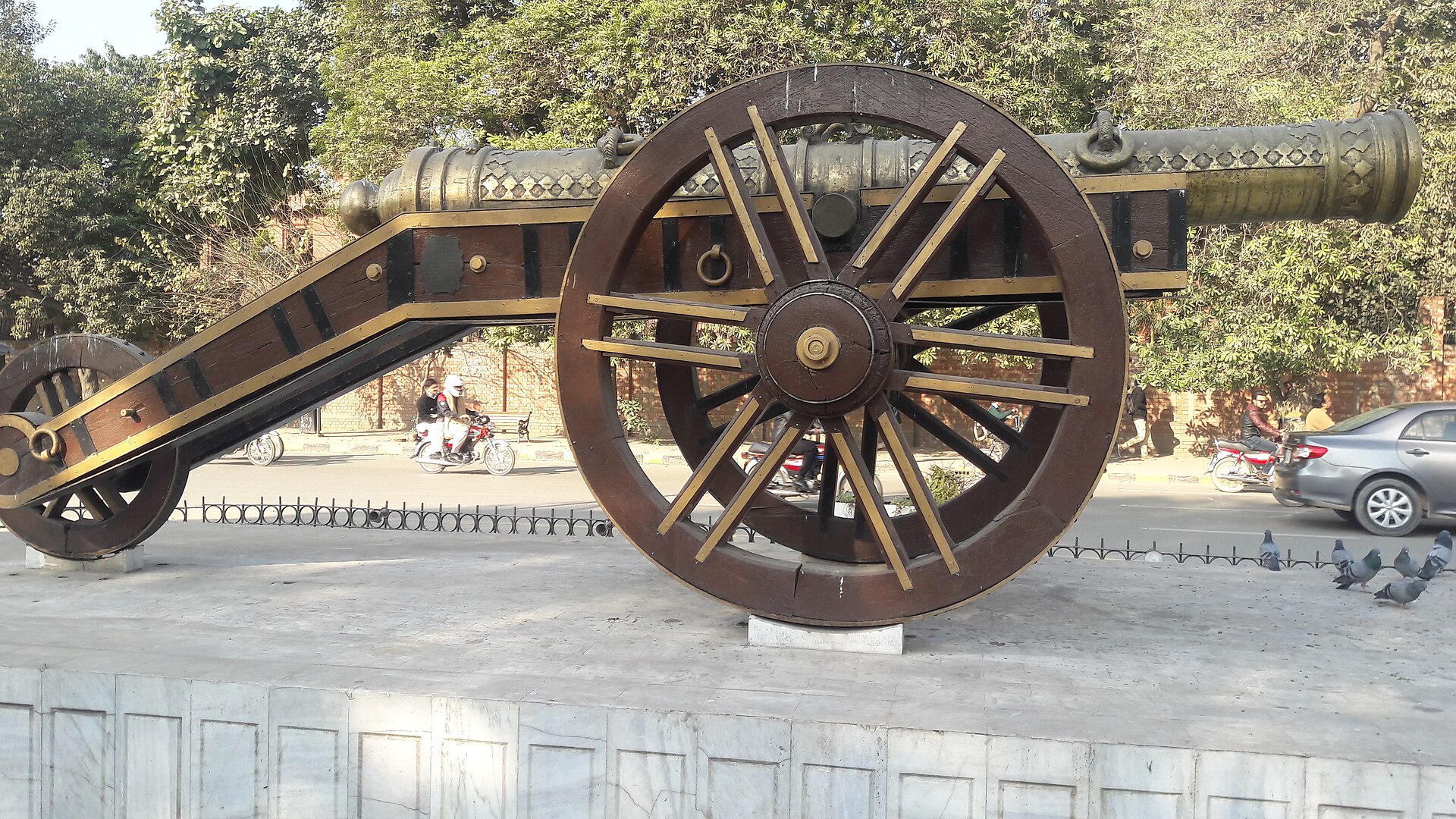
Zamzama Gun, Lahore
The 'fire-breathing dragon' of Lahore — a cannon so prized that rulers fought over it for sixty years.
Age
Cast in about 1757 — more than 265 years old
Origin
Cast in Lahore by the metalsmith Shah Nazir, under Shah Wali Khan, vizier of the Durrani ruler Ahmad Shah
Find it now
On Mall Road (Shahrah-e-Quaid-e-Azam), in front of the Lahore Museum, Lahore
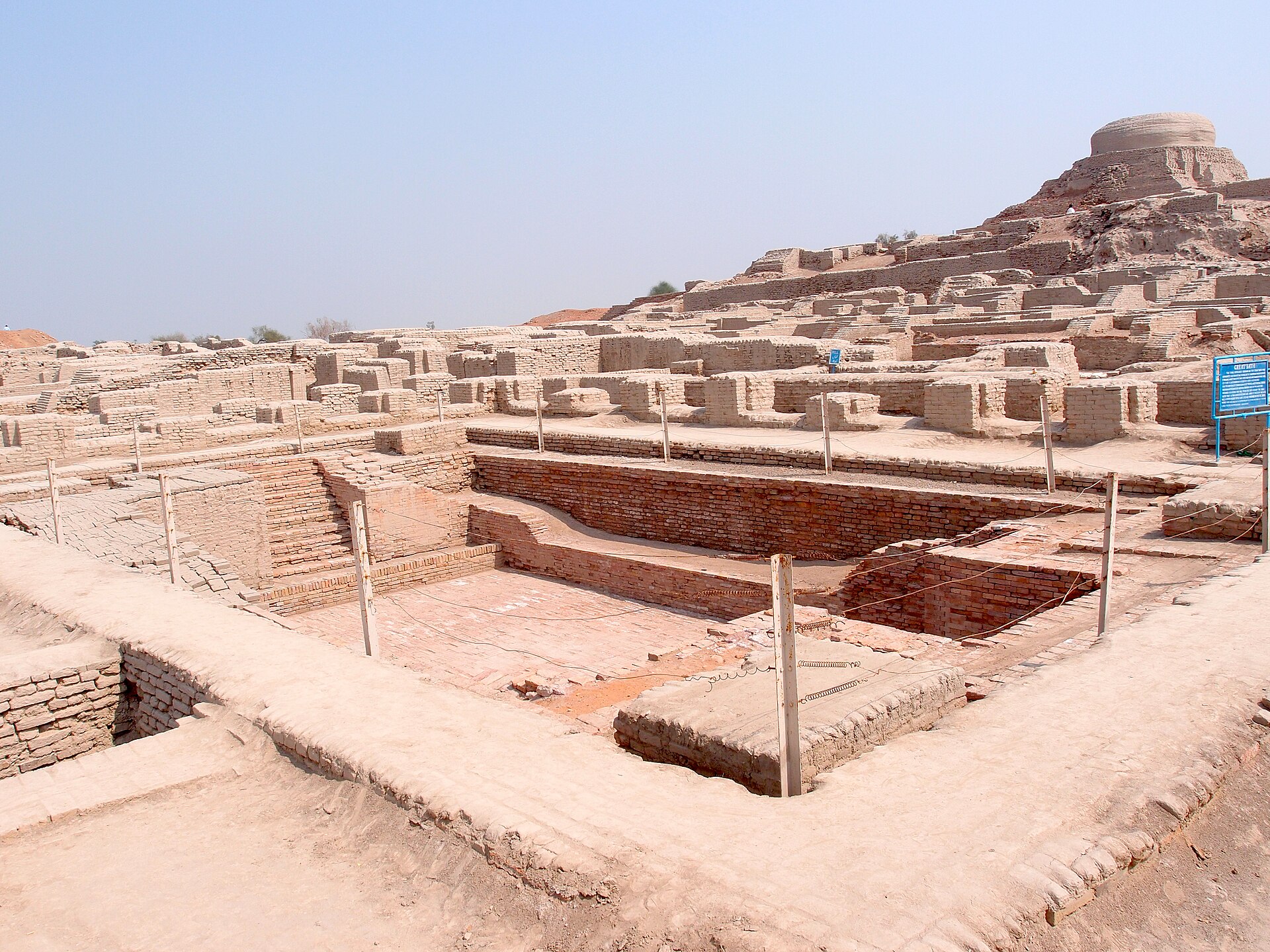
Stand on Lahore's Mall Road, in front of the Lahore Museum, and you meet a dragon. The Zamzama Gun is a huge green-bronze cannon, 4.3 metres long with a bore of 24 centimetres, weighing over 4,500 kilograms. It is counted among the largest pre-modern cannons in the world, and among the largest ever made in the Indian subcontinent. Even its name rolls like its own shot: Zamzama is rendered in the sources as 'thunder' or 'roar'.
The gun was born in a Lahore foundry in about 1757. The metalsmith Shah Nazir cast it — together with a second gun of the same size — under the direction of Shah Wali Khan, vizier to the Afghan king Ahmad Shah Durrani. Persian verses moulded into the barrel, along with the date of manufacture and the names of the monarch and the maker, praise it as the 'capturer of strongholds' and 'a destroyer even of the strongholds of heaven'. The copper and bronze for the casting, the historical accounts say, was obtained by melting down household utensils collected from the citizens of Lahore.
Zamzama first fired in anger at the Battle of Panipat on 14 January 1761, in Ahmad Shah's service. Afterwards, as the king returned towards Kabul, the gun stayed behind in Lahore with his governor, Khawaja Ubed, because the carriage meant to carry it was not ready; its twin, which was taken along, was lost while crossing the River Chenab. In 1762 the Sikh sardar Hari Singh Bhangi seized the gun and its new owners renamed it Bhangian di Top, the Cannon of the Bhangis. For decades afterwards it was fought over and hauled from stronghold to stronghold — resting for a time in the Shah Burj of Lahore Fort, carried off to Gujranwala by Charat Singh, and snatched back and forth by rival chiefs.
In 1802 Maharaja Ranjit Singh defeated the Bhangis and took the gun. He used it in the battles of Daska, Kasur, Sujanpur, Wazirabad and Multan. At the Siege of Multan it was fired four times and made two breaches in the walls of Multan Fort, through one of which the Sikh army entered on 20 June 1818 — but the effort badly damaged the great gun itself. Brought back to Lahore, it was found unfit for any further use.
Retirement turned out to be fame. The cannon stood outside Delhi Gate until 1860, and in 1870 it was placed at the entrance of the Lahore Museum, then housed in the Tollinton Market; when the present museum building was built, the gun moved with it. Repaired in 1977, it rests today on Mall Road, with the Lahore Museum and the National College of Arts beside it. And it has a second life in books: Rudyard Kipling's novel Kim opens with its hero sitting astride Zam-Zammah, opposite the old Ajaib-Ghar — the Wonder House, the Lahore Museum. That is why it is also known simply as Kim's Gun.
Sources
- Lahore Museum — Background: Zamzama / Kim's Gun
- Zamzama — Wikipedia (drawing on Latif's Lahore history, 1892, and the Encyclopaedia of Sikhism)
Every fact in this exhibit was checked against the sources above. If you spot an error, write to us at downloadkaro.pk@gmail.com and we will correct it.